Quiet buildings after dark
Late nights, closed buildings and open grounds. Sorveo flags people in restricted or closed areas after hours and alerts campus security with a snapshot and location, so a patrol can check in quickly.
Sorveo connects to your campus's existing cameras and adds a real-time intelligence layer — alerting when anyone not authorised appears in halls, labs or server rooms, flagging after-hours presence in restricted areas, recognising banned individuals from your watchlists, and giving your team a searchable record of every event across every campus. No new cameras, no rip-and-replace.
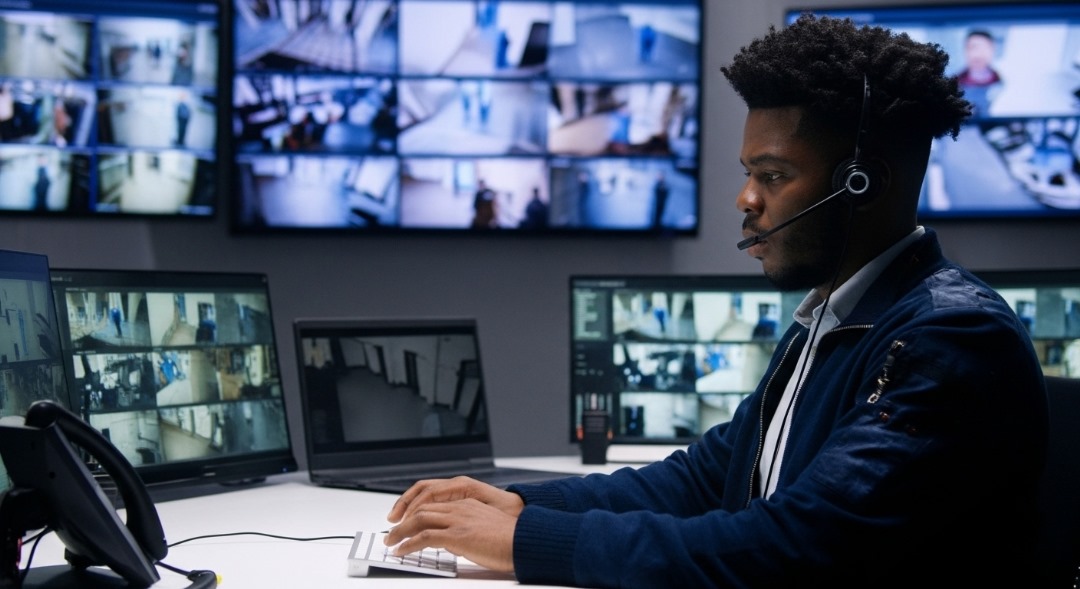
Thousands of people, dozens of buildings, open perimeters and late nights. Sorveo gives every camera constant attention so your team sees what matters, when it matters.
Late nights, closed buildings and open grounds. Sorveo flags people in restricted or closed areas after hours and alerts campus security with a snapshot and location, so a patrol can check in quickly.
Residences see unauthorised access and theft. With an allowlist on hall entrances and corridors, residents and staff pass silently — anyone else raises a critical alert to your control room.
Laptops, lab equipment and IT hardware are targets. Restrict sensitive rooms to named staff and researchers, and Sorveo raises a critical alert when anyone else appears on those cameras.
Excluded students, trespassers or people under a banning notice can walk straight onto an open campus. Sorveo matches faces against your watchlists and alerts the right team with a photo.
Several campuses, with security and facilities teams that need different things. Organise sites as Site → Building → Floor → Location and give each team a role with only the pages it needs. See security governance.
A camera offline near a residence is a blind spot for students. Sorveo monitors camera health continuously and flags signal loss, obstruction and tampering the same day.
Enrol residents, staff and researchers to an allowlist for sensitive cameras. They pass silently; anyone else raises a critical alert, and the Exclusion Detection report shows unauthorised entries by camera. See access control.
Mark buildings, plant rooms or grounds as restricted out of hours, or draw a line across an entrance, and Sorveo flags anyone who enters or crosses it. See perimeter detection.
Keep watchlists of banned individuals and get an alert with a photo when one appears, routed only to the people subscribed to that list, at the alert level you set. See watchlist alerts.
Model each campus as Site → Building → Floor → Location, so alerts, cameras and reports roll up cleanly and each campus team sees its own buildings. See security governance.
Build roles such as “Campus Security” or “Facilities” that grant exactly the pages each team needs, protected by two-factor authentication, with every action in the audit trail.
Search every recognition by name, camera, date or result type and review the short event clip around a detection (needs the edge device online or cloud clip storage), so safeguarding, HR and police enquiries can jump to the right moment. See incident investigation.
Schedule a daily security summary, watchlist-match and alert-response reports — including time to acknowledge per responder — by email as PDF or CSV. See security reporting.
People counting, occupancy and crowd-density analytics for lecture theatres, sports venues and open days are on Sorveo's near-term roadmap, as is behaviour detection such as loitering and fall detection. They aren't available today.
Yes. Sorveo adds AI to the IP cameras you already have across buildings and residences through an on-site Sorveo edge appliance, as long as each camera exposes a reachable video stream. There's no rip-and-replace, and each camera's detection profile (face, presence, perimeter or vehicle) can be changed remotely.
Sorveo helps campus security keep sensitive areas under control: it flags people in restricted or closed areas after hours, raises a critical alert when anyone not on the allowlist appears at hall entrances, and recognises banned individuals from your watchlists — with alerts sent to the right team by email, in-app, SMS or WhatsApp. Behaviour detection such as loitering and fall detection is on our roadmap.
Yes. Put an allowlist on residence entrance and corridor cameras: residents and staff pass silently, and anyone else raises a critical alert to your control room. Restricted-area detection can also flag presence in closed areas after hours, and the Exclusion Detection report shows unauthorised entries by camera.
Not yet. Occupancy and crowd-density analytics are on Sorveo's near-term roadmap. Today, for events, Sorveo can alert stewards and security when someone on a watchlist appears, and flag anyone entering areas that should be closed to the public.
Sorveo supports cloud, hybrid and on-premise deployments so footage can stay on the university network where required, with encryption, role-based access and audit logging.
Yes. Sorveo supports universities and campuses in Nigeria, South Africa, Kenya, Ghana, Rwanda and Egypt, with deployment options to suit local bandwidth and compliance needs.
Walk through a live deployment with our team, see real detections on real campus feeds, and get a tailored security plan for your campus.