AI Vs Traditional CCTV Monitoring
A side-by-side of what changes when you put AI on top of CCTV.
Read article →Video intelligence is the software layer that turns CCTV footage into real-time decisions. Here's what it covers, what it doesn't, and what to look for when evaluating it.
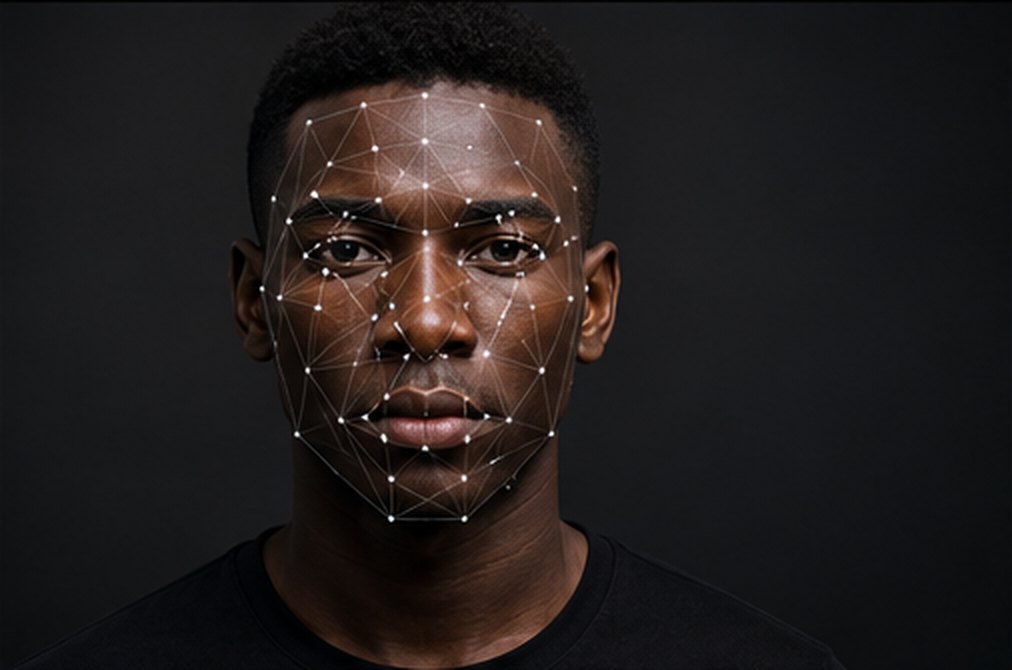
"Video intelligence" is one of those terms that gets used everywhere and defined nowhere. Vendors stretch it to cover anything from basic motion alerts to large multimodal models. Buyers come away unsure what they're actually buying. Security operators inherit deployments labelled "AI video intelligence" that turn out to be little more than a face on top of legacy analytics.
So let's pin it down. This article gives a working definition of video intelligence, the capabilities a serious platform should include, the technical architecture that delivers them, and a buyer's framework you can use in the next vendor conversation you have.
Video intelligence is the software layer that converts video feeds into structured, real-time information about what is happening in those feeds — and routes that information to the people, systems, or workflows that need it.
Two parts of that definition matter most. First, it's about structured information: a video intelligence platform doesn't just produce more video; it produces events ("person detected at Cam-04, 14:32:08, dwell 47 seconds, matched watchlist entry POI-117"), metadata, classifications, and search-indexed records. Second, it's real-time: the structured information emerges as the event is happening, not hours later in a manual review.
Everything else — facial recognition, ANPR, behaviour analytics, camera-health monitoring — is a specific capability within video intelligence, not a synonym for it.
The terms overlap, but they aren't interchangeable. The distinction matters because legacy "video analytics" carries baggage that modern video intelligence has shed.
Legacy video analytics (roughly 2005–2018) was characterised by:
Modern video intelligence (2019 onwards, mainstreaming 2022+) is characterised by:
If a vendor is selling you "video intelligence" but their feature list reads like the legacy column, that's a label-reuse problem worth surfacing in the procurement conversation.
A capable video intelligence platform in 2026 should cover, at minimum, the following eight areas. Treat this as a shopping list when you next read a vendor brochure.
1. Object detection and classification. Person, vehicle, animal, package — each surfaced as a structured event with bounding box, confidence score, attributes (colour, vehicle type, direction of travel) and timestamp.
2. Behaviour classification. Loitering, fall detection, fighting, perimeter breach, tailgating, queue length, dwell time. The platform should understand what a subject is doing, not just where they are.
3. Facial recognition and watchlist matching. Where legally permissible, face matching against a customer-controlled watchlist — for persons of interest, banned individuals, VIPs, or access-managed populations. Pure 1:N identification against unbounded databases is generally not what serious enterprises buy; controlled 1:N against a watchlist they own is.
4. ANPR / licence plate recognition. Vehicle plate recognition with access-list matching for gate management, parking, and fleet movement.
5. Anomaly detection. Events that don't match a learned baseline of "normal" for a camera or zone. The strongest deployments combine rule-based detections (for known patterns) with anomaly detection (for the unknowns).
6. Camera-health monitoring. Signal loss, frame rate drop, sudden tilt, contrast failure, scene obstruction, tampering. The same platform that watches the feeds should watch the cameras themselves.
7. Alerting and escalation. Configurable routing — to app, SMS, email, control-room dashboards, or third-party SIEM/PSIM. Crucially, an escalation engine that prevents alarm fatigue by silencing low-confidence or duplicate events.
8. Indexed search and forensic retrieval. Every event timestamped, geo-tagged to a camera, and structurally searchable. "Show me every red vehicle near the loading bay last Thursday between 18:00 and 22:00" should be a query, not a multi-hour manual scrub.
Optional but increasingly common: multimodal reasoning that combines video with audio, access-control logs, IoT sensor data, or even natural-language queries ("flag anyone behaving like they're stealing"). The 2026 frontier is moving here fast.
A discovery call about your sites and incident profile. We'll tell you what Sorveo would surface.
At a high level, video flows through five stages from camera to incident response. Understanding the pipeline helps you spot vendors who are skipping a layer or buying it from someone else (which has cost and reliability implications).
Stage 1 — Ingestion. The platform connects to camera feeds. In practice this is via RTSP streams, ONVIF discovery, or direct NVR/VMS API integration. Robust ingestion handles intermittent connections, retries gracefully, and works with mixed-vendor estates.
Stage 2 — Decoding and pre-processing. Compressed video (H.264, H.265) is decoded into frames. Pre-processing handles resolution scaling, framerate downsampling (most detections don't need 30fps; 5–10 is plenty), and basic image normalisation.
Stage 3 — Inference. The neural networks run. Modern platforms use a stack of specialised models: a fast detection model (YOLO-family or similar) running on every frame, followed by classification, tracking, and behaviour models running on detected objects. Inference happens at the edge (on local GPUs or NPUs near the cameras) for real-time detection, in the cloud for slower or aggregate analyses, or in a hybrid arrangement.
Stage 4 — Event reasoning. Raw detections become events. A person box appears across 15 consecutive frames in a restricted zone — that's a "perimeter breach" event with start and end timestamps. A face match exceeds a confidence threshold for three frames — that's a "watchlist hit" event. This stage is where the platform's logic lives, and it's where the false-positive problem is solved or not.
Stage 5 — Delivery. Events route to dashboards, alerting channels, and external systems. Indexed and stored for forensic search. Some platforms expose a streaming API so customer systems can subscribe to events programmatically.
Where a platform lives architecturally — cloud, edge, hybrid — affects latency, bandwidth, compliance posture, and resilience. For most African deployments, hybrid is the right answer: edge inference for real-time detection (latency-tolerant) and cloud aggregation for cross-site search and reporting (bandwidth-efficient).
Video intelligence is a software purchase. Like any software purchase, it should be justified in operational terms, not by the technology itself. The recurring value patterns we see in production deployments are:
Mean time to detect compresses. Events that would have been discovered hours after the fact (during a quarterly review of footage) get surfaced in seconds. For high-cost incidents — perimeter intrusion, theft, slip-and-fall, dispensary breach — that compression is the difference between a recoverable situation and a six-figure loss.
Operator effectiveness multiplies. Instead of two operators trying to watch 60 monitors, two operators handle a triaged event queue that's been pre-filtered down to 15–25 events a shift. The operators are doing actual work, not playing whack-a-mole with a wall of screens.
Forensic review collapses. Incident investigation that used to take 2–3 hours of scrubbing collapses to under a minute of search. Compounded across an organisation that handles 100+ incidents a year, that's a meaningful reclaim of human time.
Camera estate uptime improves. Continuous camera-health monitoring fixes blind spots in days instead of quarters.
Cross-site intelligence becomes possible. A theft pattern learned at one mall becomes a watchlist deployed at all malls. A new vehicle of interest seen at one site is flagged at every entrance across the estate.
None of these are speculative. Each shows up in deployment outcomes regularly. The variable is how much each is worth to your specific operation — which is why measuring on your own cameras matters more than reading the spec sheet.
A short, opinionated framework for evaluating video intelligence platforms:
Myth 1: "AI eliminates security staff." No. AI augments staff by filtering the firehose of footage into a triaged event queue. The role of the operator changes — less staring at monitors, more responding to surfaced events and managing escalation — but the role doesn't vanish.
Myth 2: "AI is too inaccurate for production." This was true around 2017. It's not true in 2026 for the major detection categories (person, vehicle, behaviour, plate). Accuracy in production is now governed more by camera placement, lighting, and configuration than by the underlying model.
Myth 3: "AI is too expensive." True only if compared to the cost of doing nothing. Compared to the alternative of more operators or more cameras to compensate for the existing blind spots, AI is consistently the lower-cost option in moderate-to-large estates.
Myth 4: "I need new cameras for AI to work." No. Any reasonable IP camera with adequate resolution and frame rate is enough. AI runs on the software side; the cameras don't change.
Myth 5: "Cloud AI is the only option." Cloud is one option. Edge and hybrid are equally valid, and often preferable for bandwidth-, compliance-, and latency-sensitive deployments — including most African enterprise sites.
They overlap, but video intelligence is the broader term. Traditional video analytics typically meant rule-based detections like motion-in-region or tripwire crossing. Video intelligence covers those plus learned-behaviour models, anomaly detection, multimodal reasoning, and the operational tooling needed to turn detections into decisions.
No. Modern video intelligence platforms layer on top of existing IP, NVR, and hybrid CCTV systems. The intelligence runs in software — at the edge, in the cloud, or hybrid — and reads from whichever camera feeds the platform is granted access to.
Cloud video intelligence processes video on remote servers; edge processing runs the AI on local hardware at the site. Most real-world deployments use a hybrid model: edge processing handles real-time detection (to survive bandwidth and power instability), and the cloud handles aggregation, search, and cross-site analytics.
The current generation handles person and vehicle detection, attribute recognition, behaviour classification (loitering, perimeter breach, falling, fighting), face matching against a watchlist, licence plate recognition, camera-health states, and increasingly anomaly detection.
Production accuracy depends heavily on camera placement, lighting, model tuning, and the specific detection. Person detection in good conditions typically runs above 95% precision and recall. The honest framing for buyers is that accuracy is a deployment outcome, not a vendor brochure number — and it should be measured on your own footage.
Sorveo is a video intelligence platform built for real-world deployment conditions — including across Nigeria and the wider African market. Book a discovery call to talk through your sites or explore use cases in shopping malls.
A side-by-side of what changes when you put AI on top of CCTV.
Read article →
The non-negotiables that separate effective large-facility CCTV from expensive video recording.
Read article →
The operational mechanics that turn alerts into actual incident reduction.
Read article →A discovery call about your sites and challenges. We'll tell you exactly what Sorveo could do on cameras like yours.