7 Signs Your CCTV Isn't Delivering Value
Seven diagnostics you can run this week.
Read article →The eight non-negotiables that separate large-facility CCTV that actually works from expensive video recording. Coverage, health, escalation, retention, training, audit, integration, measurement.
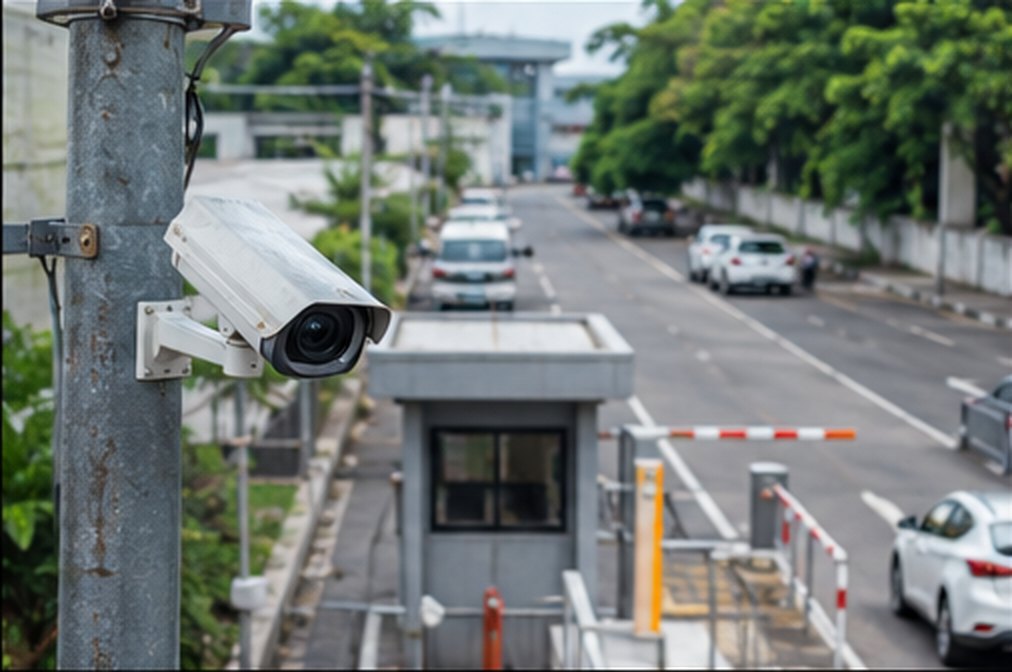
Large facilities — shopping malls, hospitals, corporate campuses, industrial sites, multi-block residential estates — are where CCTV either delivers extraordinary value or quietly fails. The line between the two outcomes isn't budget, camera count, or technology vintage. It's discipline.
This article walks through the eight practices that separate effective large-facility CCTV from expensive video recording. None of them are radical. All of them are routinely skipped. Working through them gives any facility a credible plan for getting actual value from the infrastructure already in place.
Most large facilities have arrived at their current camera estate by accumulation. A wing is built, cameras are added. An incident happens, more cameras are bolted on. A regulator visits, a few extra appear at perimeter points. The result is a camera estate that grew rather than was designed — and that has predictable coverage gaps.
The discipline is to maintain a coverage map: a documented diagram of every camera, what it's intended to cover, what its dependencies are (power, network, lighting), and the residual gaps that the current estate doesn't address. Update the map quarterly. Use it as the basis for any expansion decision.
Specific failure modes to watch for:
A camera that's been offline for three weeks is functionally not part of your security infrastructure. In assessments across African enterprise sites, 8–15% of cameras are typically in a partially or wholly inoperative state at any given moment. We've seen above 20% in poorly-maintained estates. Every one of those is a guaranteed blind spot.
The practice is to monitor the cameras themselves with the same discipline as the feeds they produce. Signal loss, frame rate drop, sudden tilt, contrast failure, scene obstruction, tampering — each becomes a maintenance ticket the moment it's detected, with a defined response SLA.
A workable SLA structure:
Modern AI video intelligence platforms include camera-health monitoring as a foundational capability, not an add-on. If your current setup requires manual quarterly camera walks to discover health issues, you're operating at a serious disadvantage.
The single most common failure mode in large-facility CCTV monitoring is alarm fatigue. A high-volume, low-signal alert source trains operators to ignore the entire alert console. Once that pattern sets in, real alerts go unactioned.
The practice is to design escalation, not just alerting. Every alert source needs:
The right operating principle is that every alert should produce an action. If 90% of alerts result in "marked as acknowledged, no action", the alert is broken — not the operator.
Use Sorveo's free 90-minute audit framework to score your CCTV operation against the eight best practices.
Storage is cheap; legal liability is not. The right retention policy is one that's defensible — proportionate, documented, and applied consistently — rather than the default of "as long as the disks hold out".
The practical considerations:
Large-facility CCTV operations have evolved beyond the "watch the wall of monitors" model. The operating model now is event-driven: AI surfaces events, operators triage and respond. Training needs to match.
What good operator training covers:
The training programme should include a shadowing component (new operators paired with experienced operators for their first 4–6 weeks) and quarterly refreshers on new platform capabilities and emerging incident patterns.
Every interaction with footage should be logged. Who accessed what, when, for what stated purpose. This isn't merely a regulatory requirement (though it is one under NDPR, POPIA and equivalents); it's a security control in its own right. A CCTV system that nobody monitors is a CCTV system that can be quietly misused.
What good access governance looks like:
CCTV is one source of security signal among several: access control, intrusion detection, fire alarm, vehicle barriers, visitor management. A large facility that runs each of these as a separate island misses the cross-signal value.
Examples of cross-system integration that pay off:
This integration is increasingly standard. AI video intelligence platforms expose APIs and event streams that let them be a first-class citizen in the broader security operations stack.
The final and most important practice. Most CCTV operations measure activity — hours of footage recorded, cameras online, alerts generated, incidents reviewed. None of these are outcomes.
The metrics that matter for large-facility CCTV monitoring are:
Each metric should have a baseline, a target, and a quarterly review. If your CCTV operation isn't tracking these, it isn't being managed; it's being maintained. The two are different. More on the role of real-time alerts in driving these metrics.
A large facility in this context means anything from 100 cameras upwards. The common factor is that headcount-based monitoring is impossible and the operation depends on technology to fill the gap.
Research consistently finds that human visual attention fails after 4–6 simultaneous feeds, with miss rates around 90% on screens not actively focused on after 20 minutes. AI-augmented event triage, not human screen-watching, has become the dominant operating model.
It depends on jurisdiction, industry and incident profile. Typical defensible periods are 30 days for general monitoring, 90 days for sites with longer incident-discovery cycles. NDPR, POPIA and other African regimes generally require defensible, documented retention — not indefinite storage.
Sorveo helps large-facility operations implement all eight practices on existing CCTV estates. Book a discovery call to talk through your sites, or read about deployment in shopping malls and Nigeria.
Seven diagnostics you can run this week.
Read article →
A field guide to running a multi-site SOC.
Read article →
The operational mechanics that turn alerts into incident reduction.
Read article →A discovery call about your estate. We'll tell you which of the eight practices Sorveo can help you put in place.