How AI Is Transforming CCTV Monitoring in Africa
The deeper analysis.
Read article →Seven trends shaping the African security technology market this year — and what each one means for the operators making procurement decisions in the next twelve months.

Africa's security technology market has shifted faster in the last 24 months than in the previous decade. New AI capabilities, hardening data-protection enforcement, maturing local talent, and a step-change in what buyers expect from their CCTV investments are reshaping the landscape simultaneously. The result is a 2026 market that looks meaningfully different from 2024.
This article unpacks seven trends that are concretely happening — not speculation, not vendor wishlists. Each one is showing up in real procurement, real deployments, and real conversations across Nigeria, South Africa, Kenya, Ghana, Rwanda, Egypt and beyond.
For most of the last two decades, the upgrade path for a CCTV operator was: buy newer cameras, buy a newer NVR, buy more storage. The capital cycle was hardware-driven.
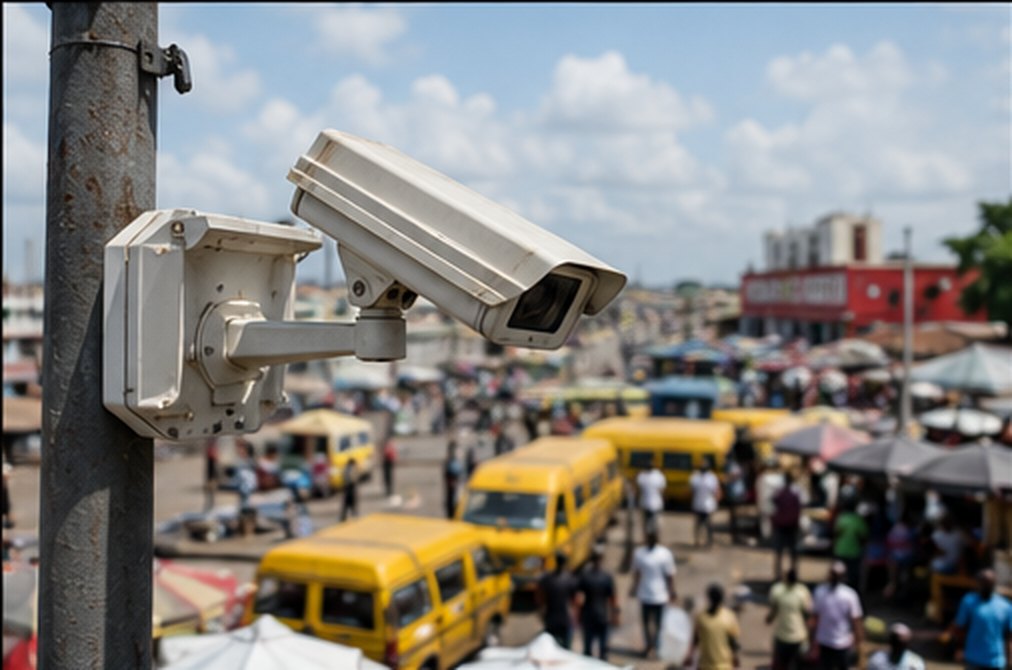
That's changing. Across malls, banks, estates and corporate sites we work with, the upgrade path in 2026 is overwhelmingly: keep the cameras, add an AI intelligence layer in software. The reasons compound — capex is preserved, deployment cycles are weeks not quarters, and the operational improvement is dramatically larger than any conceivable hardware refresh.
The market consequence is a separation between camera vendors (Hikvision, Dahua, Axis, generic ONVIF) and intelligence vendors (Sorveo and its peers). The two layers used to be coupled; in 2026 they're firmly separate. Read the deeper analysis here.
Africa's data protection landscape has matured rapidly. The headline regimes:
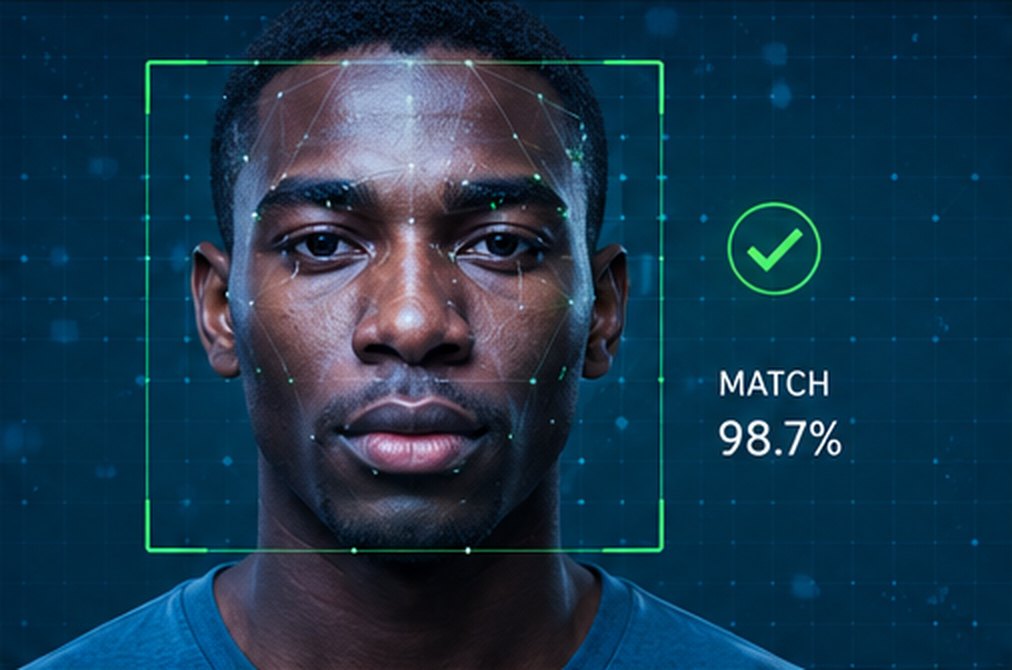
The 2026 consequence for security technology: any procurement that includes biometric processing (and increasingly any procurement that involves persistent identification of individuals) needs a defensible compliance position. Vendors who can articulate, document, and operationally support compliance win; those who can't get filtered out at vendor due-diligence stage.
Cloud-only architectures dominated the AI security marketing of 2022–2024. By 2026, edge-first or hybrid architectures have overtaken pure-cloud in real African deployments. Three forces are driving this:
Power instability. Cloud-only architectures fail open during power and connectivity loss. Edge processing degrades gracefully.
Bandwidth realities. Streaming full-resolution video from every camera to a remote cloud is bandwidth-prohibitive in most African sites. Edge processing only sends event metadata upstream.
Compliance. Data residency requirements under NDPR/POPIA make on-network footage retention materially easier to justify than cross-border cloud processing.
The practical pattern is the three-layer architecture covered in our multi-site SOC article: edge inference at each site, cloud aggregation for cross-site analytics, footage storage tiered by criticality.
Free site assessment for African enterprise estates. Power-aware, bandwidth-realistic, NDPR-aligned.
Automatic Number Plate Recognition has been technically available for years. What's changed in 2026 is that the operational use case is mainstream — and African deployment patterns have specific dimensions.
Estate management companies in Lagos, Johannesburg and Nairobi are widely deploying ANPR for gate access, replacing manual visitor logs and slow security-house lookups. Corporate campuses are using ANPR for parking management and after-hours access. Logistics operators are using ANPR for yard management. Banking facilities are using ANPR for executive parking and threat-vehicle watchlists.
The technical reality is that ANPR works well in African plate formats once configured. Local plate variations, partially-faded plates and angled approaches all require platform-level tuning, but the modern generation of platforms handles all three.
For years, physical security, cybersecurity, access control and surveillance lived in separate domains with separate teams, separate budgets and separate tools. In 2026, the unification of these functions under a single security operations umbrella is accelerating.
What unified looks like:
For vendors, this means physical security technology that integrates cleanly with SIEM/PSIM platforms, exposes structured APIs, and follows enterprise security practices (SSO, RBAC, audit logging) wins enterprise deals. Standalone physical-security tools increasingly lose.
Five years ago, African enterprise security technology was largely procured in USD because most vendors invoiced in USD. The 2026 reality is that local-currency invoicing — NGN, KES, ZAR, GHS, RWF, EGP — has become a procurement requirement for large parts of the market.
The drivers:
Vendors who haven't operationalised local-currency invoicing, local contracting entities, and local payment rails are competing against those who have — and losing deals.
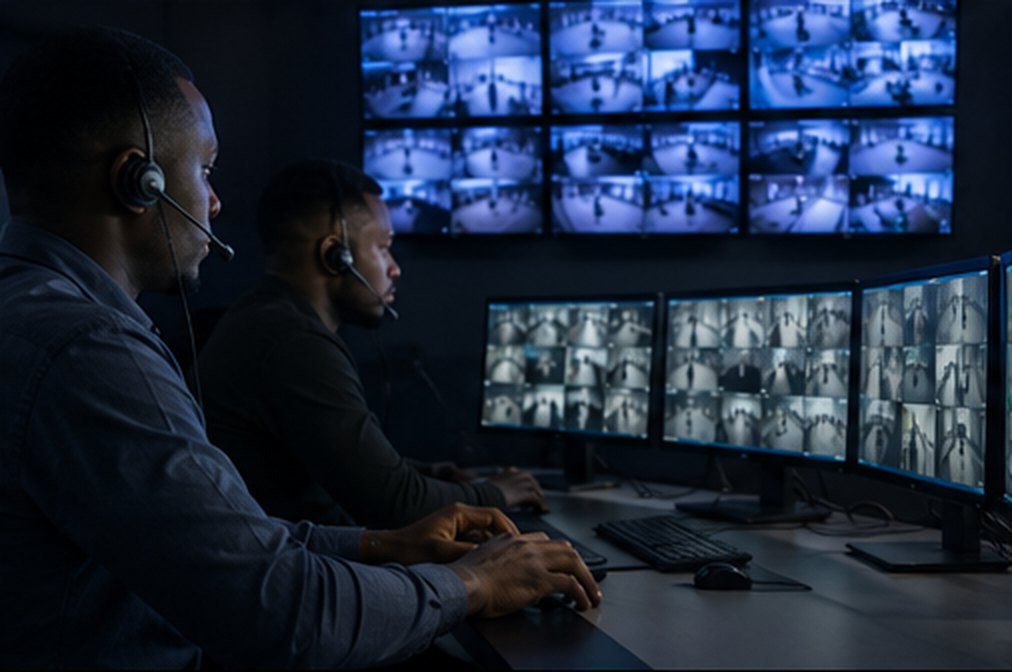
This is the trend with the most visible operational impact. Traditional manual CCTV monitoring required headcount that scaled roughly linearly with camera count. AI-augmented monitoring breaks that relationship.
In 2025-26 deployments we've supported, the typical staffing model for a previously 6-operator monitoring room is now 2 operators handling a triaged event queue — with better outcome metrics (faster MTTD, lower MTTR, more named prevented incidents) than the larger team produced under traditional monitoring. Read the comparison in detail.
The displaced headcount doesn't disappear from security operations — the people move to higher-value roles: response coordination, investigation, training, watchlist governance. But the structural cost of physical-security monitoring per camera is declining materially.
For African security industry employment, this is both opportunity and challenge: more sites get effectively monitored, but the entry-level "screen-watcher" role thins out and the senior "response coordinator" role thickens. Training and career-pathing needs to adapt.
If you're scoping security technology procurement in the next twelve months, three practical takeaways:
1. Demand AI on existing infrastructure. Any vendor proposing hardware replacement as the path to AI capability should be challenged. The default expectation is software-layer AI on your current cameras.
2. Document compliance posture before signing. Get specific commitments on data residency, retention, audit logging, and role-based access. Get them in writing, in the contract, before the platform goes live.
3. Insist on local commercial terms. Local-currency invoicing, local entity contracting, local support hours. If a vendor can't offer these, they're not commercially serious about the African market — and the deployment will struggle.
The combination of AI video intelligence layered on existing CCTV, plus the maturation of data-protection enforcement that's pushing deployments toward on-premise and hybrid architectures. These two forces together are reshaping how every serious operator approaches surveillance procurement.
NDPR — and its updated framework under the NDPA 2023 — has moved from advisory to enforced. The NDPC has issued fines, demanded compliance audits, and signalled that biometric processing including facial recognition requires demonstrable lawful basis, proportionality, and on-network footage residency where appropriate.
Yes, increasingly. The combination of power instability, bandwidth realities, and tightening data residency requirements means cloud-only architectures are an increasingly hard sell for enterprise deployments.
Sorveo is built for the African 2026 landscape: AI on existing CCTV, edge-first, NDPR-aligned, local-currency contracting. Book a discovery call or explore deployment in Nigeria.
Edge-capable. NDPR-aligned. Local invoicing. Lagos-headquartered. Book a discovery call.